
 Lecturer SCIE 113 & Science One. Killam Teaching Prize Nominee 2026.
Education Researcher
Lecturer SCIE 113 & Science One. Killam Teaching Prize Nominee 2026.
Education ResearcherI arrived in Canada 🇨🇦 in August 2020 and embarked on a journey to become a skillful scientist and member of the academic ecosphere of Vancouver. I bring collegiality, creativity, and a strong work ethic to my research and teaching. I am passionate about the intersection of science and education, and I strive to make a positive impact in both fields.
A few professional milestones can describe me:
👨🏫Teaching: I have been a sessional lecturer for two courses at UBC: First-Year Seminar in Science (SCIE 113) and Thinking Like a Life Scientist (BIOL 180); I delivered guest lectures to Fundamentals of Evolutionary Biology (BIOL 336); In 2025, I joined the fascinating Science One Program as a sessional lecturer of the Scientific Thinking & Literacy component!
🔬Research: I have been involved in various research projects, more recently with the genome annotation of a high-quality assembly of the ctenophore Mnemiopsis leidyi at the Plotkin lab;
🧑🤝🧑Mentoring: I have had the opportunity to mentor undergraduate and graduate students, young adults and adults alike to develop their skills, find their passions in life, and more;
🌍Outreach:I have been involved in various outreach activities to promote science education, including through my science communication blog, "On the Trails of Reason" (language: Portuguese-Brazil).
🧬Interests (Bioinformatics / General Biology) : Evolutionary Biology, Genetics, Genomics, Data Science & Big Data for Biology.
🧠Interests (Philosophy of Science & Education) : Critical Thinking for Science and Education, Fostering of Epistemic Virtues, Nature of Science, and Science Communication Strategies.
Warning
Problem: The current name of your GitHub Pages repository ("Solution: Please consider renaming the repository to "
http://".
However, if the current repository name is intended, you can ignore this message by removing "{% include widgets/debug_repo_name.html %}" in index.html.
Action required
Problem: The current root path of this site is "baseurl ("_config.yml.
Solution: Please set the
baseurl in _config.yml to "Education
-
University of British ColumbiaGenome Science and Technology (GSAT)
Master of ScienceSep. 2020 - April 2024 -
 Universidade de Caxias do SulBachelor of Science in Biological Sciences2014 - 2018
Experience
-
University of British ColumbiaSessional LecturerSep. 2024 - Present
-
University of British ColumbiaGraduate Research AssistantSep. 2020 - April 2024
-
University of British ColumbiaGraduate Teaching AssistantSep. 2020 - April 2024
-
Universidade de Caxias do SulUndergraduate Research Assistant & Private ConsultantJune 2014 - August 2020
Honors & Awards
-
Faculty of Science Killam Teaching Prize Nominee 20262026
-
Faculty of Science Top Student Experience of Instruction (SEI) Scores2024, 2025
-
Faculty of Science Graduate Award (for outstanding academic achievements)2020-2022
-
Undergraduate Research Fellowship2014 - 2018
Selected Publications (view all )
![[Original Research Paper] Epistemological considerations on the exercise and teaching of critical thinking](/assets/images/covers/2026-IS.png)
[Original Research Paper] Epistemological considerations on the exercise and teaching of critical thinking
Guilherme Brambatti Guzzo*, Gabriel Dall'Alba* (* equal contribution)
Insignare Scientia 2026
Critical thinking is widely recognized as a central goal in both science education and general education. In this paper, we propose elements that we consider fundamental to an epistemology of critical thinking: the rejection of epistemic relativism and absolutism, as well as the recognition of the provisional nature of the reasons supporting beliefs and actions. We further argue that fallibilism, in addition to opposing these epistemically extreme positions, constitutes an essential principle for the teaching of critical thinking. Understanding the fallibility of our reasons requires caution in communicating ideas and open-mindedness — that is, a willingness to consider conclusions that challenge our own beliefs. We contend that, in an education committed to the development of critical thinking, reasons presented in the classroom must be continuously evaluated and revised, as well as communicated and discussed based on a reasonable understanding of their epistemological foundations.
[Original Research Paper] Epistemological considerations on the exercise and teaching of critical thinking
Guilherme Brambatti Guzzo*, Gabriel Dall'Alba* (* equal contribution)
Insignare Scientia 2026
Critical thinking is widely recognized as a central goal in both science education and general education. In this paper, we propose elements that we consider fundamental to an epistemology of critical thinking: the rejection of epistemic relativism and absolutism, as well as the recognition of the provisional nature of the reasons supporting beliefs and actions. We further argue that fallibilism, in addition to opposing these epistemically extreme positions, constitutes an essential principle for the teaching of critical thinking. Understanding the fallibility of our reasons requires caution in communicating ideas and open-mindedness — that is, a willingness to consider conclusions that challenge our own beliefs. We contend that, in an education committed to the development of critical thinking, reasons presented in the classroom must be continuously evaluated and revised, as well as communicated and discussed based on a reasonable understanding of their epistemological foundations.
![[Feature Article] When we Become the Seekers](/assets/images/covers/2025-FI.jpg)
[Feature Article] When we Become the Seekers
Gabriel Dall'Alba*, Guilherme Brambatti Guzzo* (* equal contribution)
Free Inquiry 2025
In this article, we explore the fascinating case of Leon Festinger's "When we Become the Seekers". It serves as a scaffold to reason philosophically about our beliefs and how to navigate them. We dive deeply into the story of the so-called Seekers, and tackle ideas such as "A belief is a part of me, so what?". This article was featured and also is available in Audio edition.
[Feature Article] When we Become the Seekers
Gabriel Dall'Alba*, Guilherme Brambatti Guzzo* (* equal contribution)
Free Inquiry 2025
In this article, we explore the fascinating case of Leon Festinger's "When we Become the Seekers". It serves as a scaffold to reason philosophically about our beliefs and how to navigate them. We dive deeply into the story of the so-called Seekers, and tackle ideas such as "A belief is a part of me, so what?". This article was featured and also is available in Audio edition.
![[M.Sc. Thesis] Toward a comprehensive understanding of early metazoans : reannotation for enhanced completeness of the ctenophore Mnemiopsis leidyi genome](/assets/images/covers/2024-ubc.jpg)
[M.Sc. Thesis] Toward a comprehensive understanding of early metazoans : reannotation for enhanced completeness of the ctenophore Mnemiopsis leidyi genome
Gabriel Dall'Alba
University of British Columbia 2024
The genome of the ctenophore Mnemiopsis leidyi, a marine species of gelatinous zooplankton, was recently re-analyzed to obtain a more complete and gap-free DNA sequence. This updated survey uncovered an additional 50 million base pairs, expanding the known genetic material of this organism. Using state-of-the-art methods, we systematically labeled and interpreted different regions of the genome. We explored the repetitive sequences within the genome, providing insights into the evolutionary trajectory of ctenophore genomes. In addition, we successfully identified previously missing genes and analyzed complex regions of the genome that are traditionally difficult to resolve. Finally, through genomic comparative studies, the present M. leidyi assembly and annotation results are consistent with previous research placing the ctenophore as the earliest branching lineage in animal evolution.
[M.Sc. Thesis] Toward a comprehensive understanding of early metazoans : reannotation for enhanced completeness of the ctenophore Mnemiopsis leidyi genome
Gabriel Dall'Alba
University of British Columbia 2024
The genome of the ctenophore Mnemiopsis leidyi, a marine species of gelatinous zooplankton, was recently re-analyzed to obtain a more complete and gap-free DNA sequence. This updated survey uncovered an additional 50 million base pairs, expanding the known genetic material of this organism. Using state-of-the-art methods, we systematically labeled and interpreted different regions of the genome. We explored the repetitive sequences within the genome, providing insights into the evolutionary trajectory of ctenophore genomes. In addition, we successfully identified previously missing genes and analyzed complex regions of the genome that are traditionally difficult to resolve. Finally, through genomic comparative studies, the present M. leidyi assembly and annotation results are consistent with previous research placing the ctenophore as the earliest branching lineage in animal evolution.
![[Feature Article] Science Does Not Have All the Answers—and This Is Not a Problem](/assets/images/covers/2024-SI.jpg)
[Feature Article] Science Does Not Have All the Answers—and This Is Not a Problem
Gabriel Dall'Alba*, Guilherme Brambatti Guzzo* (* equal contribution)
Skeptical Inquirer 2024
In this article, we explore the philosophical framework that claiming "science does not have all the answers" as an argument against the validity of a scientific idea is misleading. Instead, we argue that it is part of the ethos of science to not have all the answers.
[Feature Article] Science Does Not Have All the Answers—and This Is Not a Problem
Gabriel Dall'Alba*, Guilherme Brambatti Guzzo* (* equal contribution)
Skeptical Inquirer 2024
In this article, we explore the philosophical framework that claiming "science does not have all the answers" as an argument against the validity of a scientific idea is misleading. Instead, we argue that it is part of the ethos of science to not have all the answers.
![[Original Research Paper] The importance of qualified communication of ideas on science education](/assets/images/covers/2022-RICA.jpg)
[Original Research Paper] The importance of qualified communication of ideas on science education
Gabriel Dall'Alba*, Guilherme Brambatti Guzzo* (* equal contribution)
Revista Interdisciplinar de Ciência Aplicada 2022
Science education involves several features that are beyond the so-called products of science: ideas, theories, hypotheses, laws, and results. Any education that aims the full comprehension of science as a human endeavor should incorporate epistemic qualities of the nature of science in the teaching of scientific content. One strategy for promoting the transmission of these features is the formal employment of qualification of ideas through guarding terms. Here, we discuss some of the epistemic features of science and their connection to the qualification of ideas in classrooms: epistemic fallibilism, open-mindedness, and the ongoing review process. We argue that the employment of terms and sentences that better reveal the strength of the existing evidence for a given idea can better reflect the presence of those science features on the scientific process. The substitution of terms such as “proven” or “it was proven that” by “probable” or “evidence suggests that” can better describe the epistemic status of scientific ideas, which are not fixed between true or false, but contained in a complex spectrum of likelihood. Strengthening science education with emphasis on the understanding of the nature of science can help to fix modern problems, such as the increasing distrust in science and in their products, such as vaccines and pharmaceutical drugs, as well as helping to reasonably dose the strength of the belief on those ideas.
[Original Research Paper] The importance of qualified communication of ideas on science education
Gabriel Dall'Alba*, Guilherme Brambatti Guzzo* (* equal contribution)
Revista Interdisciplinar de Ciência Aplicada 2022
Science education involves several features that are beyond the so-called products of science: ideas, theories, hypotheses, laws, and results. Any education that aims the full comprehension of science as a human endeavor should incorporate epistemic qualities of the nature of science in the teaching of scientific content. One strategy for promoting the transmission of these features is the formal employment of qualification of ideas through guarding terms. Here, we discuss some of the epistemic features of science and their connection to the qualification of ideas in classrooms: epistemic fallibilism, open-mindedness, and the ongoing review process. We argue that the employment of terms and sentences that better reveal the strength of the existing evidence for a given idea can better reflect the presence of those science features on the scientific process. The substitution of terms such as “proven” or “it was proven that” by “probable” or “evidence suggests that” can better describe the epistemic status of scientific ideas, which are not fixed between true or false, but contained in a complex spectrum of likelihood. Strengthening science education with emphasis on the understanding of the nature of science can help to fix modern problems, such as the increasing distrust in science and in their products, such as vaccines and pharmaceutical drugs, as well as helping to reasonably dose the strength of the belief on those ideas.
All publications
Recent Outreach
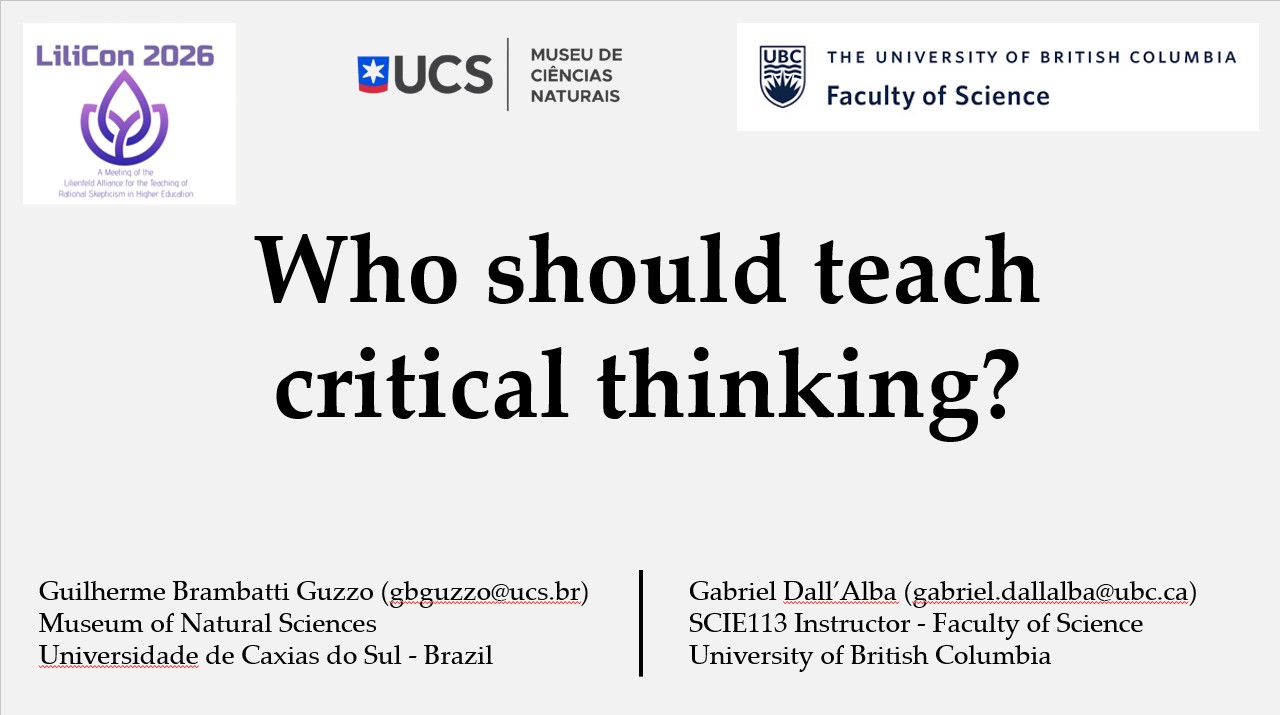
A spin-off from our upcoming Skeptical Inquirer publication.
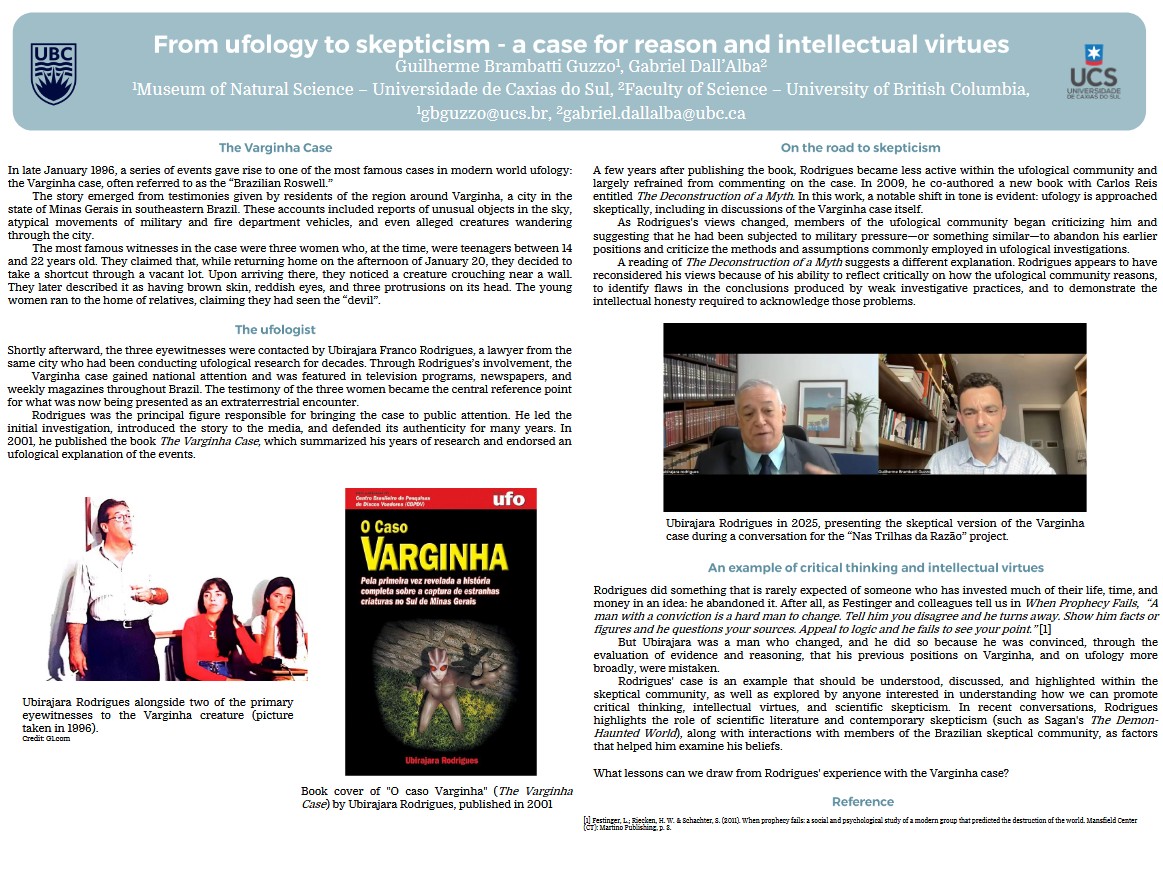
A poster about the central figure of the Varginha Case, for the CSICon 2026.
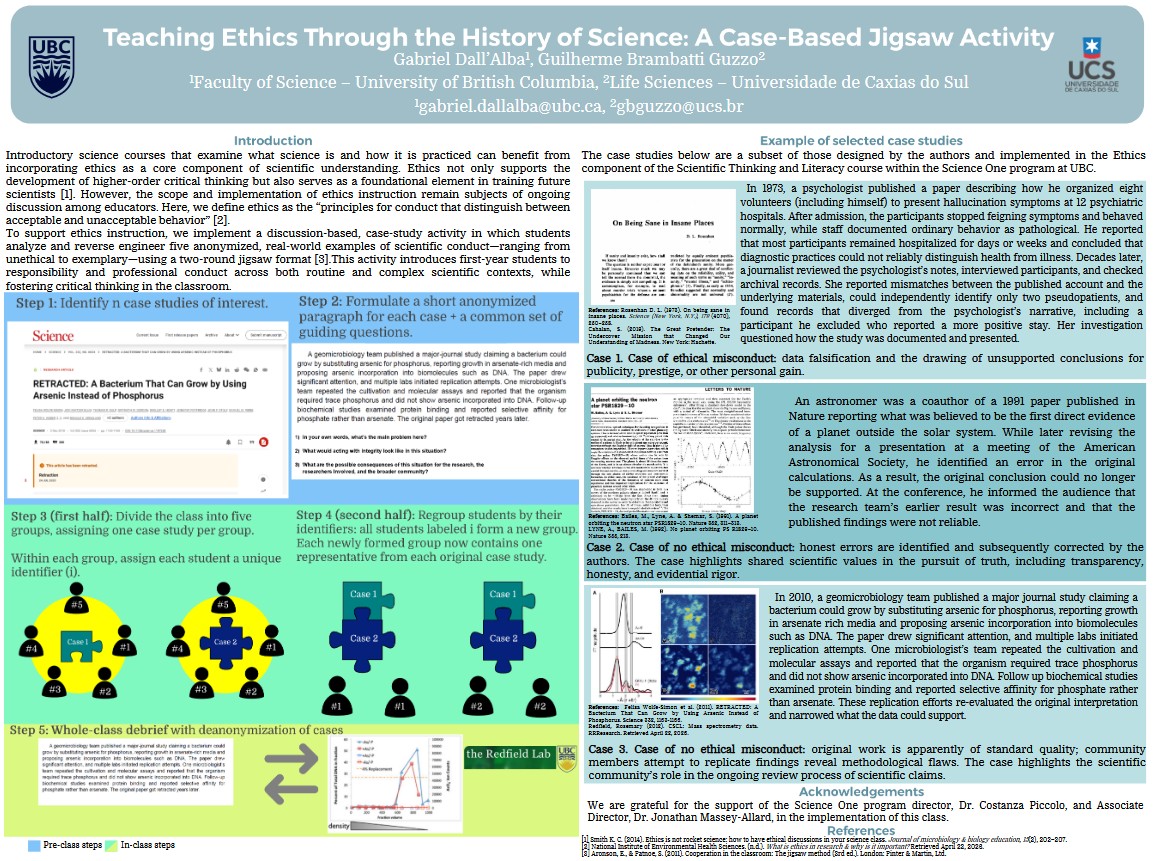
A poster for the UBC Science Education Open House 2026.
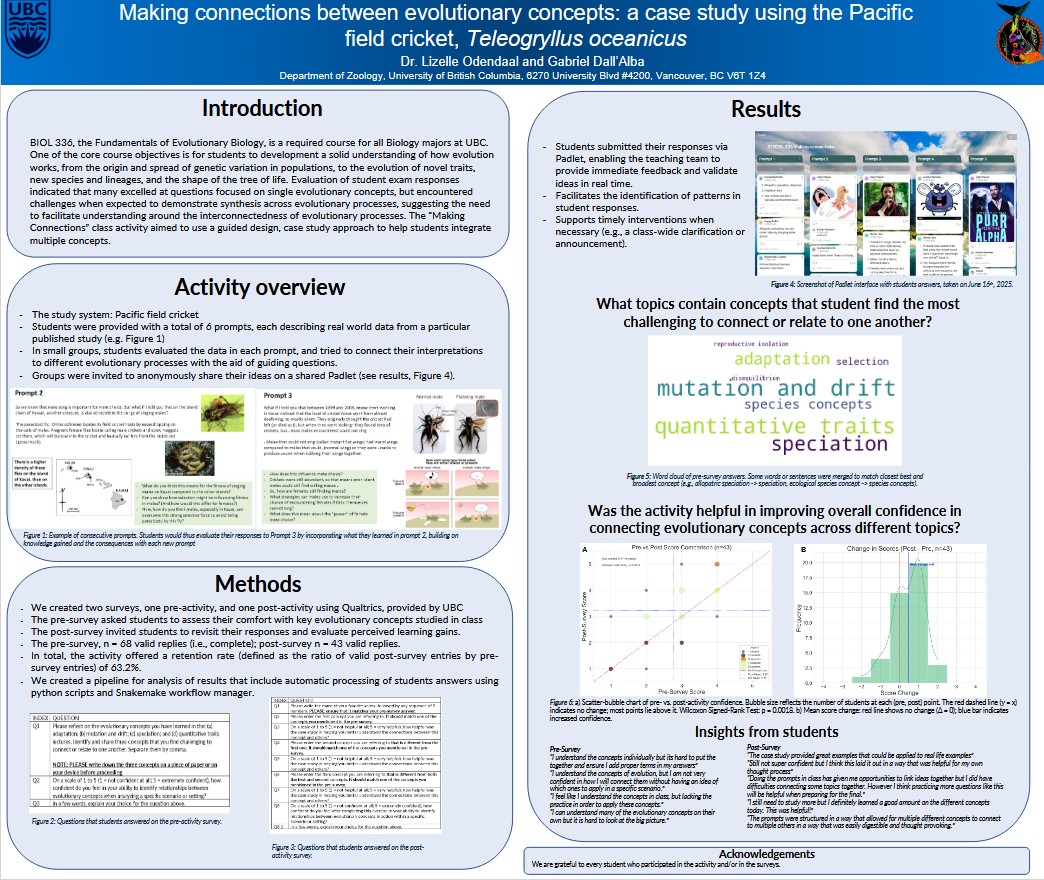
A presentation at UBC Biology Teaching & Learning Retreat 2025.
All outreach activities
Newsletters
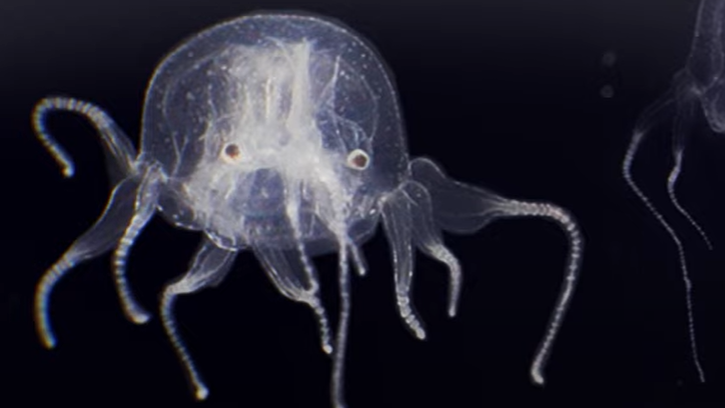
Truth is, eyes are a fascinating example of evolution in action.

[...] some collective actions, far from being abstract, operate in the “here and now,” and this line of reasoning may offer some answers to the problem we are addressing here.
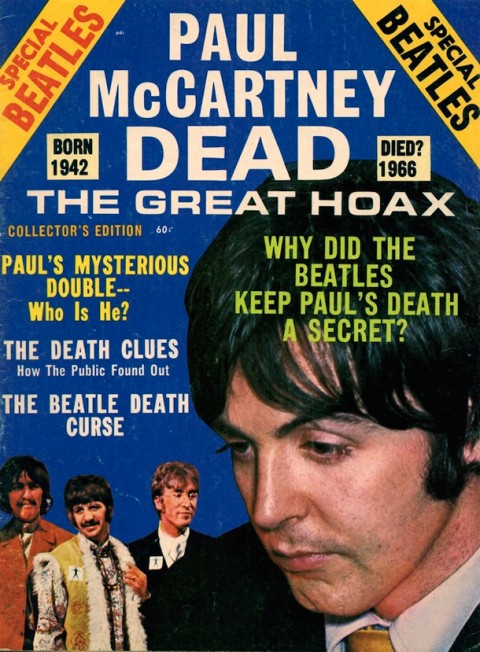
"He blew his mind out in a car... Did he, now?"

Epictetus warns us that human conflicts, both internal and external, do not demand perfection in our actions (because perfection is not even possible).